

Building a music label is an exciting opportunity to support creative talent while developing a business around music. However, turning that vision into a sustainable operation takes more than discovering talented musicians. It requires a clear identity, thoughtful planning, reliable partnerships, and a long-term commitment to artists.
Independent Music Labels offer an alternative path for musicians who want greater creative freedom and more control over their careers. By establishing the right foundation, label owners can create opportunities for emerging artists while building a recognizable presence in the music industry.
Building an Independent Music Label
Every successful label begins with a clear idea of what it wants to represent. Before signing artists or releasing music, define the label’s creative direction, business goals, and audience. These decisions will influence everything from branding to future release strategies. A strong identity also helps a new label stand out in a competitive market. Rather than trying to appeal to everyone, focus on a recognizable musical direction and build meaningful connections with listeners who appreciate it.
Defining Label Identity and Music Genre
Start by identifying the genres your label wants to represent, such as indie rock, electronic, hip-hop, jazz, or alternative pop. A specific musical direction makes it easier to discover suitable artists and develop a consistent catalog. You do not necessarily need to limit the label to one genre. However, its releases should share a recognizable creative identity that gives listeners a reason to follow your work.
Establishing Brand Values and Direction
A label’s brand should communicate what makes it different. Consider its visual identity, communication style, artistic philosophy, and approach to working with musicians. Think about values such as creative independence, fair partnerships, experimentation, and transparency. These principles can guide business decisions and help artists understand what to expect from the label.
Identifying Target Audiences and Markets
Understanding your audience helps determine where and how to promote music. Research listener demographics, streaming habits, popular platforms, local music communities, and emerging genre trends. Use these insights to identify potential markets and create promotional campaigns that connect with the right listeners. Social media communities and live music events can also help independent labels build an early following.
Setting Up Label Operations
Once the creative direction is established, focus on building the business structure. A music label needs organized operations to manage releases, finances, legal responsibilities, and relationships with artists. Independent artists seek record label support for services such as distribution, promotion, marketing, and career guidance. Providing these services requires clear processes and realistic financial planning, even when the label starts with a small team.
Handling Legal and Business Registration
Choose an appropriate business structure and register the label according to local regulations. Research business licensing, taxation, intellectual property rights, and music copyright requirements. It is also important to understand master recording ownership, publishing rights, licensing, and royalty agreements. Consulting a qualified music or entertainment lawyer can help prevent disputes and protect everyone involved.
Planning Budgets and Revenue Streams
Prepare a budget covering recording expenses, artwork, marketing, distribution, administration, and artist payments. Starting with a manageable number of releases can help control financial risks. Potential revenue streams include digital sales, streaming royalties, physical records, licensing, and merchandise. As Steve Stoute, founder of UnitedMasters, explained, “Today independent artists can do everything that major labels can, within reason, as long as they have the know-how and budget.” This highlights why financial resources and business knowledge matter when developing an independent music operation.
Managing Music Releases and Distribution
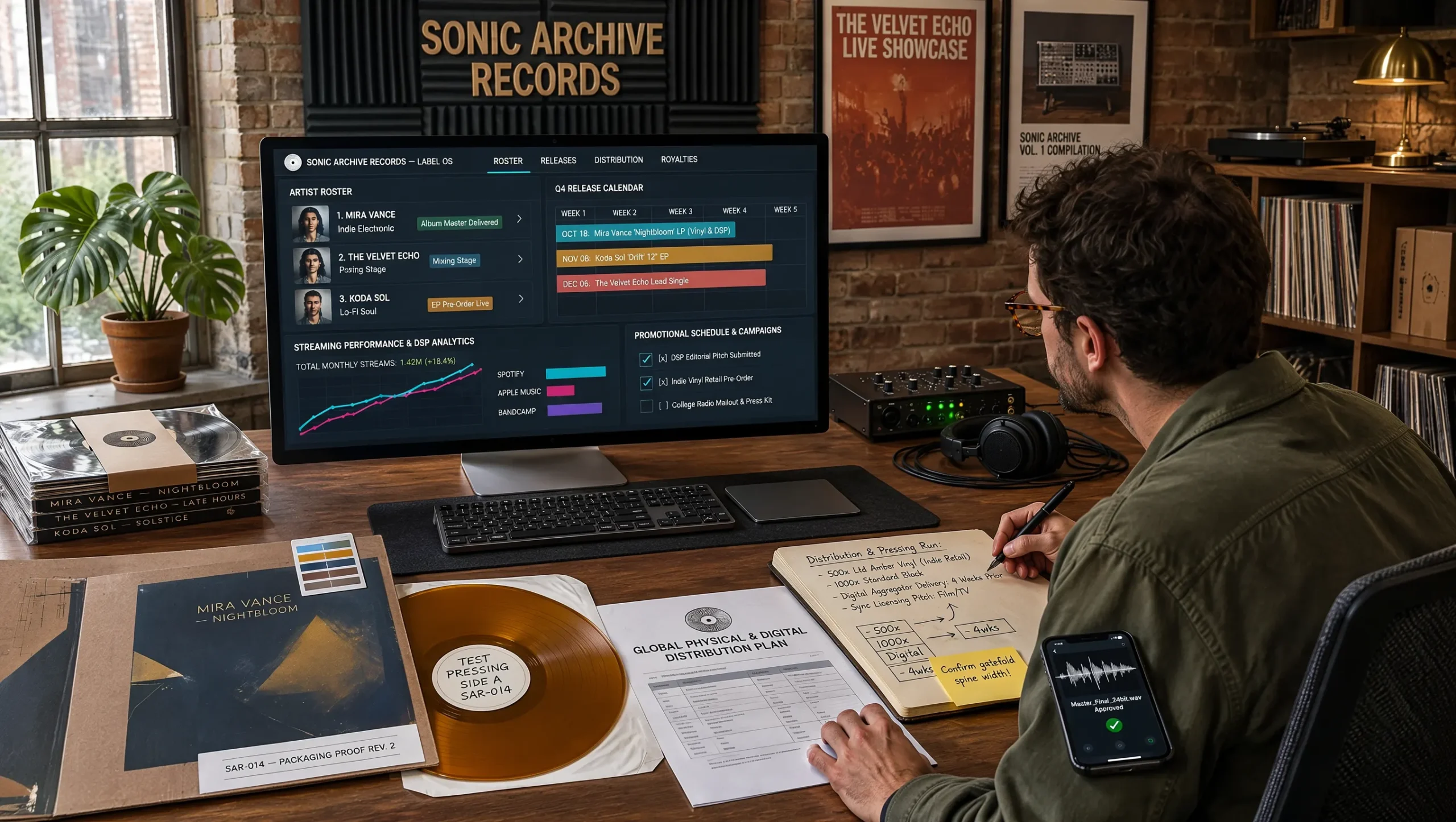
Create a release schedule that gives every project enough time for preparation and promotion. Coordinate recording deadlines, artwork, metadata, promotional materials, and distribution requirements. Digital distributors can help deliver music to streaming platforms and collect royalties. Track release performance regularly to understand listener engagement and improve future campaigns.
Developing and Managing Artists
Artists are the foundation of an independent label. Beyond releasing songs, a label should build professional relationships that encourage creative growth and sustainable careers. Strong management requires understanding each musician’s goals, strengths, and challenges. As Margi Cheske, an experienced music executive, emphasizes, “there’s no substitute for sitting with an artist and really talking with them and understanding who they are, what their vision is, what their goals are.” This approach helps labels develop partnerships based on genuine understanding rather than commercial expectations alone.
Recruiting Artists and Building Partnerships
Look for musicians whose creative direction aligns with your label’s identity. Explore local performances, online music communities, independent releases, and artist recommendations to discover promising talent. Before offering a partnership, evaluate the artist’s music, audience engagement, work ethic, and long-term goals. A shared vision can create a stronger working relationship.
Supporting Artist Career Development
Artist Career Development involves helping musicians improve their skills, build an audience, and establish a recognizable identity. Labels can provide guidance on recording, songwriting, performance, branding, and promotional strategies. Set realistic milestones with each artist and review their progress regularly. Support should reflect individual needs rather than follow the same formula for every musician.
Managing Contracts and Artist Promotion
Use clear written contracts that explain responsibilities, payment structures, royalty splits, recording ownership, licensing rights, and agreement duration. Make sure artists understand the terms before signing. For promotion, combine social media campaigns, music videos, press outreach, playlist pitching, and live performances. Monitor engagement and adjust strategies based on audience responses.
Start Building Your Independent Music Label
Developing a music label takes patience, organization, and a genuine interest in helping artists grow. From defining a recognizable identity to managing contracts and promotional campaigns, every step contributes to a stronger foundation. Start with a focused music direction, create a realistic business plan, and build relationships with artists who share your vision. With consistent planning and fair partnerships, your independent label can grow into a sustainable platform for creative talent.