
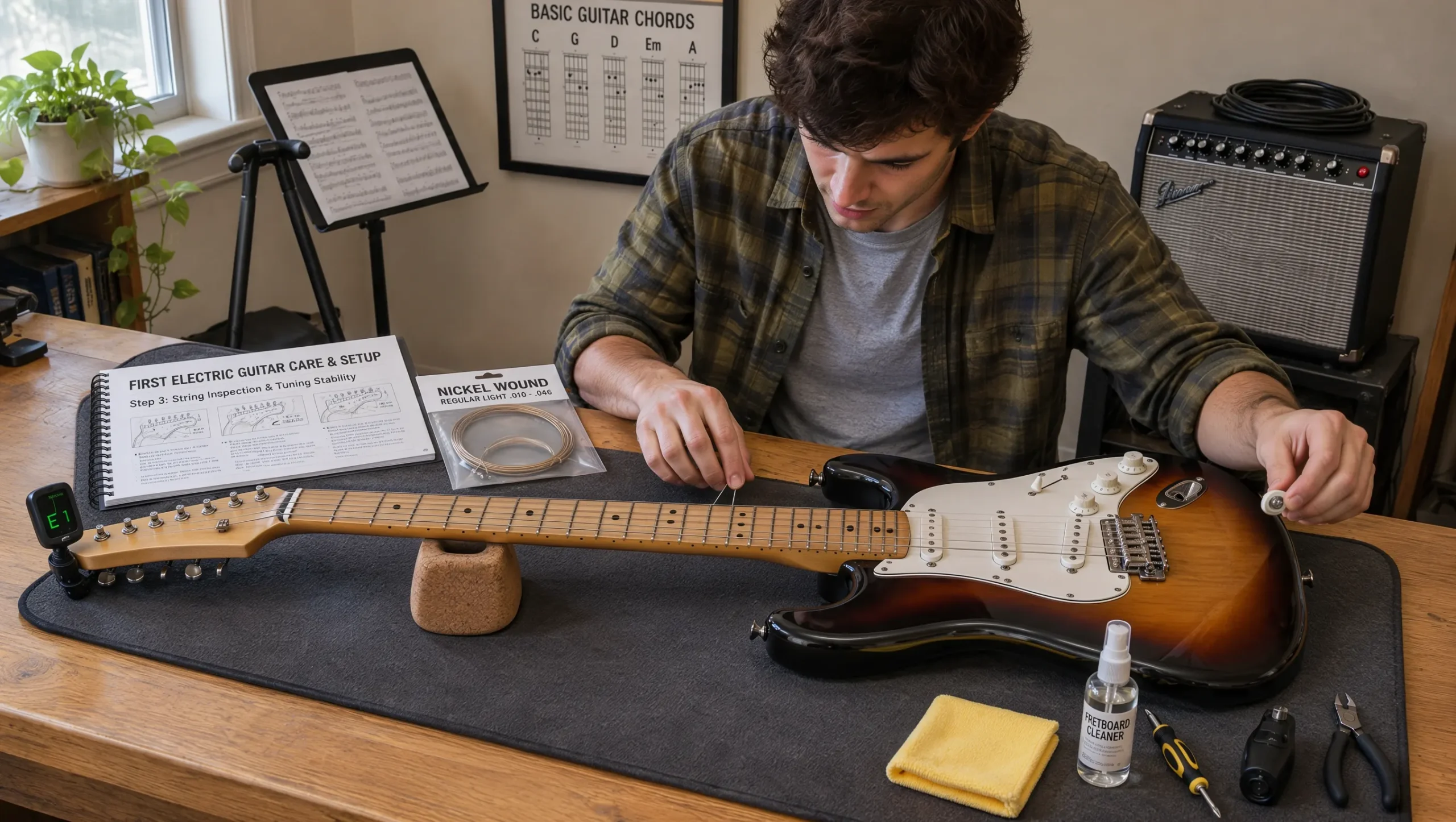
An electric guitar is more than just a musical instrument, it is an investment in creativity and musical growth. However, frequent playing, dust, sweat, and improper storage can gradually affect its appearance, sound, and performance. Regular maintenance helps prevent these problems and keeps the instrument comfortable to play.
Electric Guitar Care involves simple habits that protect your instrument and extend its lifespan. Beginners can maintain their guitars by cleaning the strings, checking important components, and storing them properly. Understanding these basic steps makes guitar ownership easier and helps avoid unnecessary repair costs.
Understanding Basic Guitar Maintenance
Maintaining an electric guitar does not require expensive equipment or advanced technical knowledge. Simple cleaning and regular inspections can prevent dirt buildup, corrosion, and damage to important components. Learning basic Guitar Maintenance Techniques also helps beginners recognize when an instrument needs attention. By understanding how different parts work, players can keep their guitars in good condition and maintain consistent playing comfort.
Cleaning the Guitar Body and Strings
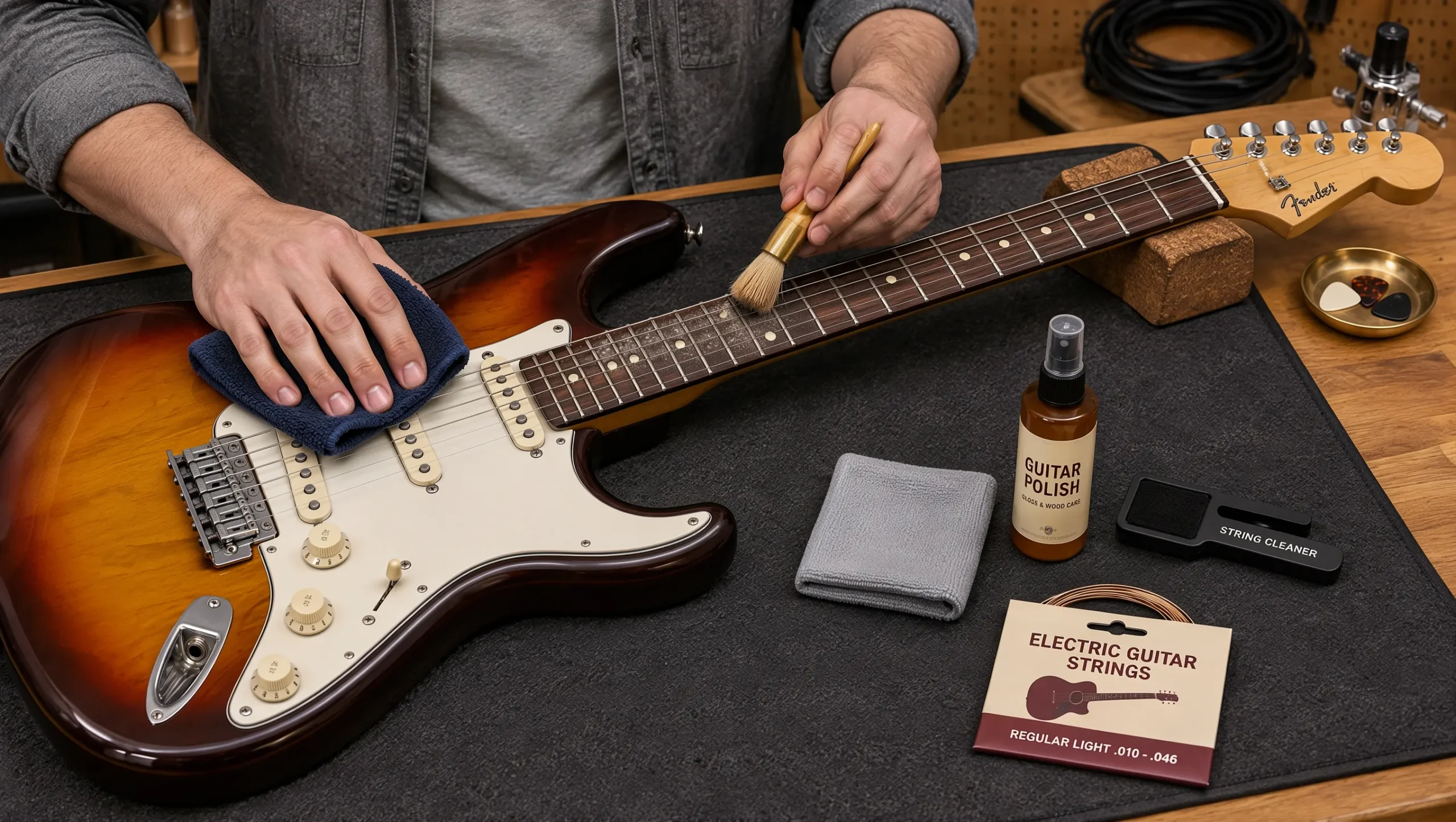
Wipe the guitar body and strings with a soft microfiber cloth after each playing session. This removes sweat, fingerprints, and dust that can gradually affect the finish and cause string corrosion. For deeper cleaning, use products specifically designed for guitars. Avoid household cleaners because some contain chemicals that may damage the instrument’s finish.
Protecting the Fretboard and Hardware
The fretboard, tuning pegs, bridge, and frets need occasional cleaning. Remove accumulated dirt carefully and use a suitable fretboard conditioner when necessary. Not every fretboard requires the same treatment. Unfinished rosewood and ebony may benefit from occasional conditioning, while finished maple generally needs a different cleaning approach. Always check the manufacturer’s recommendations before applying products.
Recognizing Early Signs of Wear
Regularly inspect your guitar for rusty strings, loose tuning pegs, damaged cables, and unusual fret buzz. These problems can affect tuning stability and playing comfort. Also look for cracks, sharp fret edges, and unexpected changes in the neck. Identifying these signs early can prevent more complicated repairs.
Essential Electric Guitar Care
Beyond regular cleaning, electric guitars require attention to their strings, pickups, electronics, and neck. These components influence sound quality, tuning stability, and overall playing response. Beginners should understand basic maintenance without attempting complicated repairs themselves. Knowing when to seek professional assistance can protect the instrument from accidental damage.
Changing Strings and Tuning Properly
Replace strings when they become rusty, lose brightness, or struggle to maintain their pitch. Choose a string gauge that suits your playing style and the manufacturer’s recommendations. Install new strings securely around the tuning posts and stretch them gently to help stabilize tuning. Use an electronic tuner to check standard tuning, E-A-D-G-B-E.
Checking Pickups and Electronic Parts
Pickups convert string vibrations into electrical signals that produce sound through an amplifier. Keep them free from dust and check that they remain securely positioned. Pay attention to crackling volume controls, unusual buzzing, or loose output jacks. If these problems continue after checking your cable and amplifier, ask a qualified technician to inspect the electronics.
Maintaining the Neck and Action
The neck supports string tension, while the action determines the distance between the strings and frets. High action can make playing uncomfortable, whereas excessively low action may cause unwanted buzzing. Changes in neck relief can affect playability and tuning stability. As guitar technician Dan Erlewine explains, “the neck is the heart of the guitar.” This is why beginners should avoid unnecessary truss rod adjustments and seek professional help when the neck needs significant correction.
Building Good Guitar Care Habits
Consistent maintenance becomes easier when it is part of your regular playing routine. Small actions, such as wiping the strings and checking the hardware, can make a noticeable difference over time. Create habits that match your playing frequency and storage environment. A simple schedule also helps you identify changes before they affect the instrument’s performance.
Storing Guitars at Safe Temperatures
Keep your electric guitar in a stable indoor environment, away from direct sunlight, heaters, and air conditioning vents. Sudden temperature changes can affect wooden components and the instrument’s finish. A protective guitar case helps reduce environmental exposure. Whenever possible, maintain moderate room humidity and avoid storing the instrument in extremely hot or cold locations.
Preventing Moisture and Physical Damage
Excessive moisture can contribute to corrosion, while very dry conditions may cause wooden components to shrink or crack. Avoid leaving your guitar in damp rooms, near open windows, or inside a hot vehicle. Use a padded case when transporting the instrument and a stable guitar stand when displaying it. These precautions reduce the risk of scratches, accidental falls, and physical damage.
Following a Regular Maintenance Routine
Maintaining an electric guitar becomes easier when care is part of your regular playing habits. After every session, take a moment to wipe the strings and guitar body with a clean microfiber cloth to remove sweat, fingerprints, and dust. Every few weeks, check whether the guitar stays in tune and look for visible signs of wear, such as rusty strings, loose hardware, or damaged cables.
Whenever you change the strings, use the opportunity to clean the fretboard and inspect the frets for dirt or unusual wear. From time to time, also check the neck, pickups, electronic components, and overall condition of the instrument. Adjust how often you perform these checks based on how frequently you play and the environment where you store your guitar. A consistent routine helps prevent minor problems from developing into costly repairs and keeps your guitar ready for every practice session.
Keep Your Electric Guitar in Great Condition
Taking care of an electric guitar does not require complicated procedures. Regular cleaning, proper storage, timely string replacement, and basic inspections can help maintain its sound and playing comfort. Start with a simple maintenance routine and pay attention to changes in performance. With consistent care and occasional professional servicing, your electric guitar can remain reliable and ready for years of musical enjoyment.