
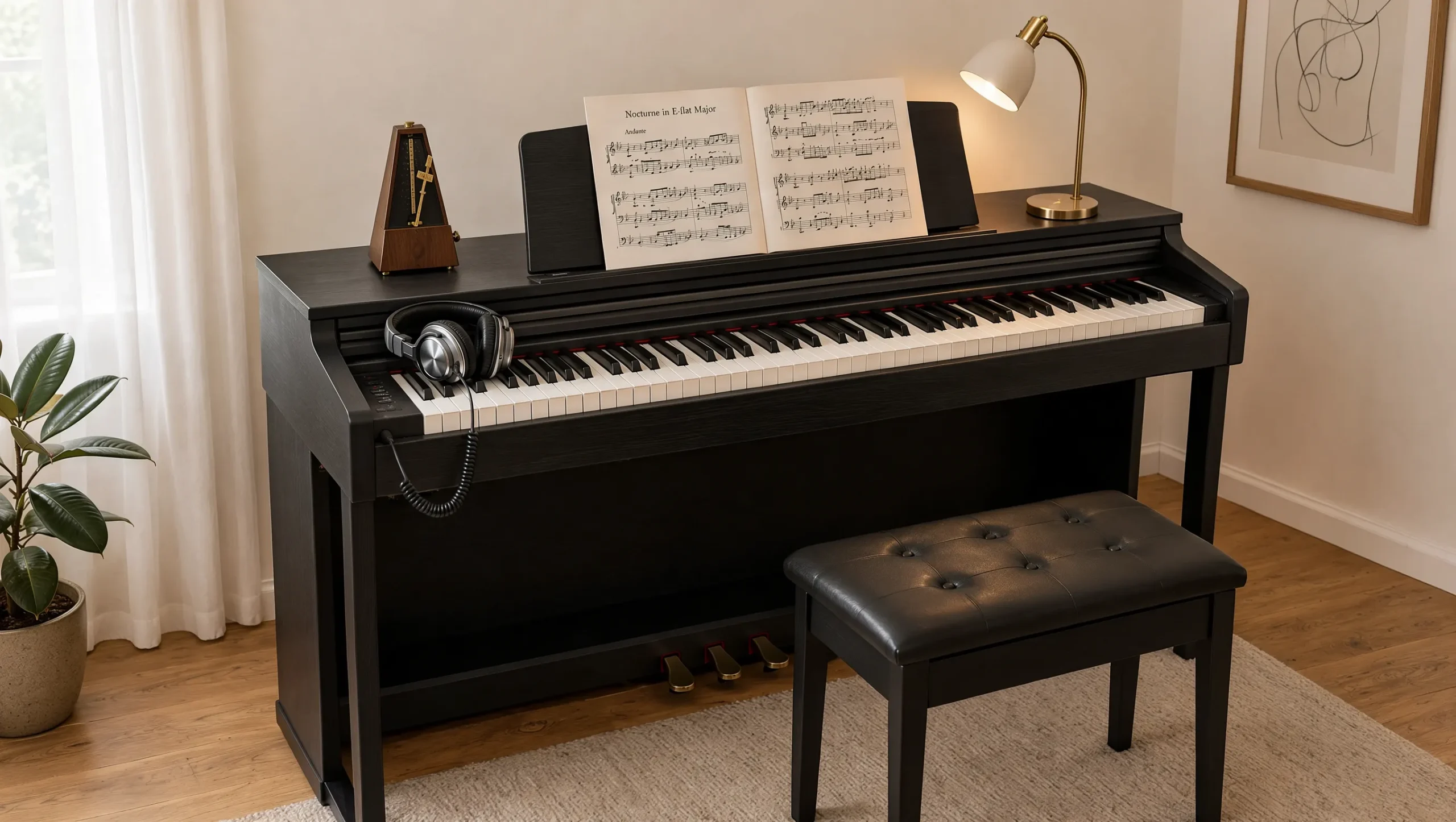
Learning piano at home can be a rewarding experience, whether you are a beginner or an experienced player. However, having the right instrument makes a big difference in comfort, playing technique, and motivation to practice regularly.
Digital Piano Selection involves more than comparing prices or choosing an attractive design. Key response, sound quality, built-in features, and available space all influence the playing experience. Understanding these factors can help you find an instrument that supports your musical goals.
Choosing a Piano for Home Practice
Choosing a digital piano starts with understanding what you need from the instrument. Beginners may prioritize ease of use and affordability, while experienced players often look for realistic key action, expressive sound, and additional playing functions. A suitable instrument should also fit comfortably into your home. Consider how frequently you plan to practice, your available budget, and whether you need features for lessons, recording, or connecting to learning applications.
Understanding Digital Piano Features
Digital pianos offer several features designed to make learning and playing more convenient. Common options include multiple instrument sounds, built-in metronomes, recording functions, and adjustable volume controls. Some models also include lesson modes that divide the keyboard into sections for practice with a teacher. Focus on features that support your current needs instead of paying extra for functions you may rarely use.
Comparing Key Actions and Sound Quality
Key action determines how the keyboard responds when you press its keys. Some digital pianos use lightweight mechanisms, while others offer hammer-action systems that simulate the resistance of acoustic piano keys. Sound quality is equally important. Richard Clayderman, an internationally recognized pianist, explains that “the most important when it comes to digital pianos is the sound and the action.” His perspective highlights why both factors deserve attention when comparing instruments.
Considering Size and Available Space
Digital pianos come in portable designs and larger console-style models. Portable instruments are easier to move and store, making them suitable for smaller rooms or flexible practice spaces. Console models often provide a more traditional appearance, integrated stands, and built-in pedals. Measure your available space before purchasing to ensure the instrument fits comfortably without restricting movement.
Evaluating Digital Piano Options
After identifying your basic requirements, compare the technical features of different models. Pay particular attention to keyboard response, sound options, and connectivity because these elements can influence your daily playing experience. Testing instruments in person is helpful whenever possible. Play different notes, experiment with soft and strong touches, and check whether the keyboard feels comfortable for extended sessions.
Weighted Keys and Playing Response
Weighted keys provide resistance that resembles an acoustic piano. Hammer-action mechanisms create a more realistic playing experience, while graded weighting makes lower keys heavier than higher ones. An 88-key keyboard is also worth considering if you plan to study classical pieces or develop advanced playing skills. Yamaha Corporation of America explains that weighted keys help players control how softly or strongly notes sound, supporting more expressive playing.
Built-In Sounds and Practice Functions
Many digital pianos include sounds beyond the traditional piano, such as electric piano, organ, strings, and harpsichord. These options allow players to explore different musical styles without purchasing additional instruments. Practice functions can also improve learning sessions. A metronome helps develop timing, while recording features allow you to review performances and identify areas that need improvement.
Connectivity and Headphone Support
Connectivity options make digital pianos more flexible. USB and MIDI connections allow players to connect their instruments to computers, recording software, and compatible music applications. Headphone support is particularly useful for quiet practice. Frederic Chiu, a concert pianist and educator, highlights that digital piano users can also practice at night. This flexibility makes digital instruments practical for households with different schedules.
Creating a Comfortable Practice Setup
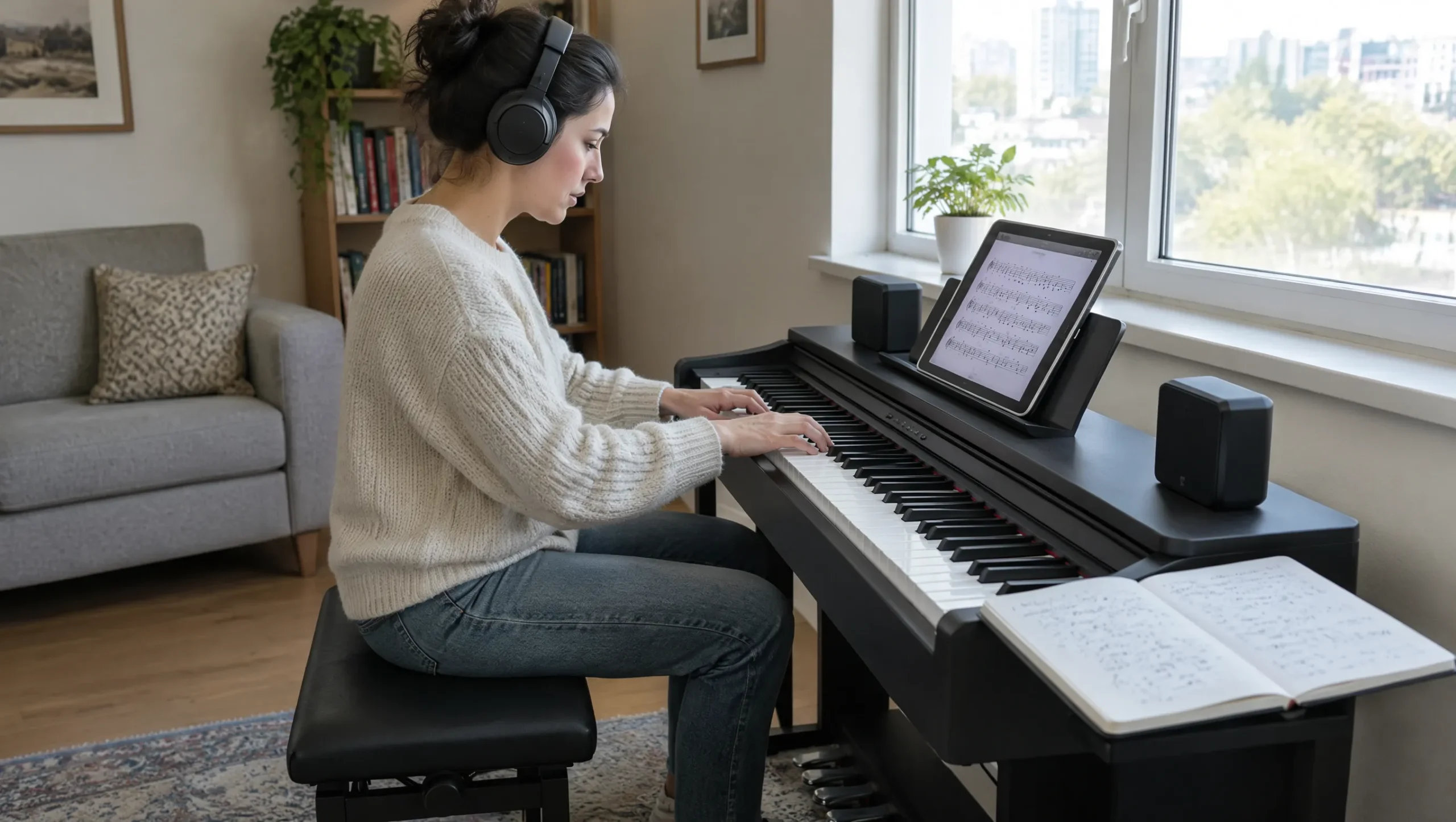
A suitable instrument is only one part of an effective learning environment. Your seating position, keyboard height, lighting, and surrounding space can also influence comfort during longer sessions. Creating a dedicated Home Piano Practice area makes it easier to build a consistent routine. Keep essential accessories nearby and arrange the setup so you can begin playing without unnecessary adjustments.
Selecting a Suitable Piano Stand and Bench
Choose a stable stand that supports the piano securely and keeps the keyboard at a comfortable height. An adjustable piano bench can help maintain proper posture while reducing unnecessary tension in your shoulders and arms. Your feet should rest comfortably on the floor or pedals, while your elbows remain approximately level with the keyboard. Proper positioning supports better technique and comfort.
Using Learning Tools for Daily Practice
Learning applications, digital sheet music, tutorial videos, and metronomes can make practice more organized. Some applications also provide interactive exercises and progress tracking for beginners. Combine these tools with structured exercises and regular lessons when possible. Use technology to support your learning rather than relying on it as a replacement for consistent practice.
Maintaining Consistent Home Piano Practice
Set a realistic practice schedule that fits your daily activities. Short, focused sessions can be more manageable than occasional long sessions without a clear plan. Divide practice time between scales, technical exercises, familiar songs, and new material. Recording your progress can also help you recognize improvements and identify skills that need more attention.
Find the Right Digital Piano for Your Home
Finding the right digital piano means balancing playing comfort, sound quality, useful features, and available space. The best choice depends on your experience, musical goals, and budget. Compare different models, test their key responses, and consider the accessories needed for a comfortable setup. With the right instrument and a consistent routine, you can create an enjoyable practice environment and continue developing your piano skills at home.