
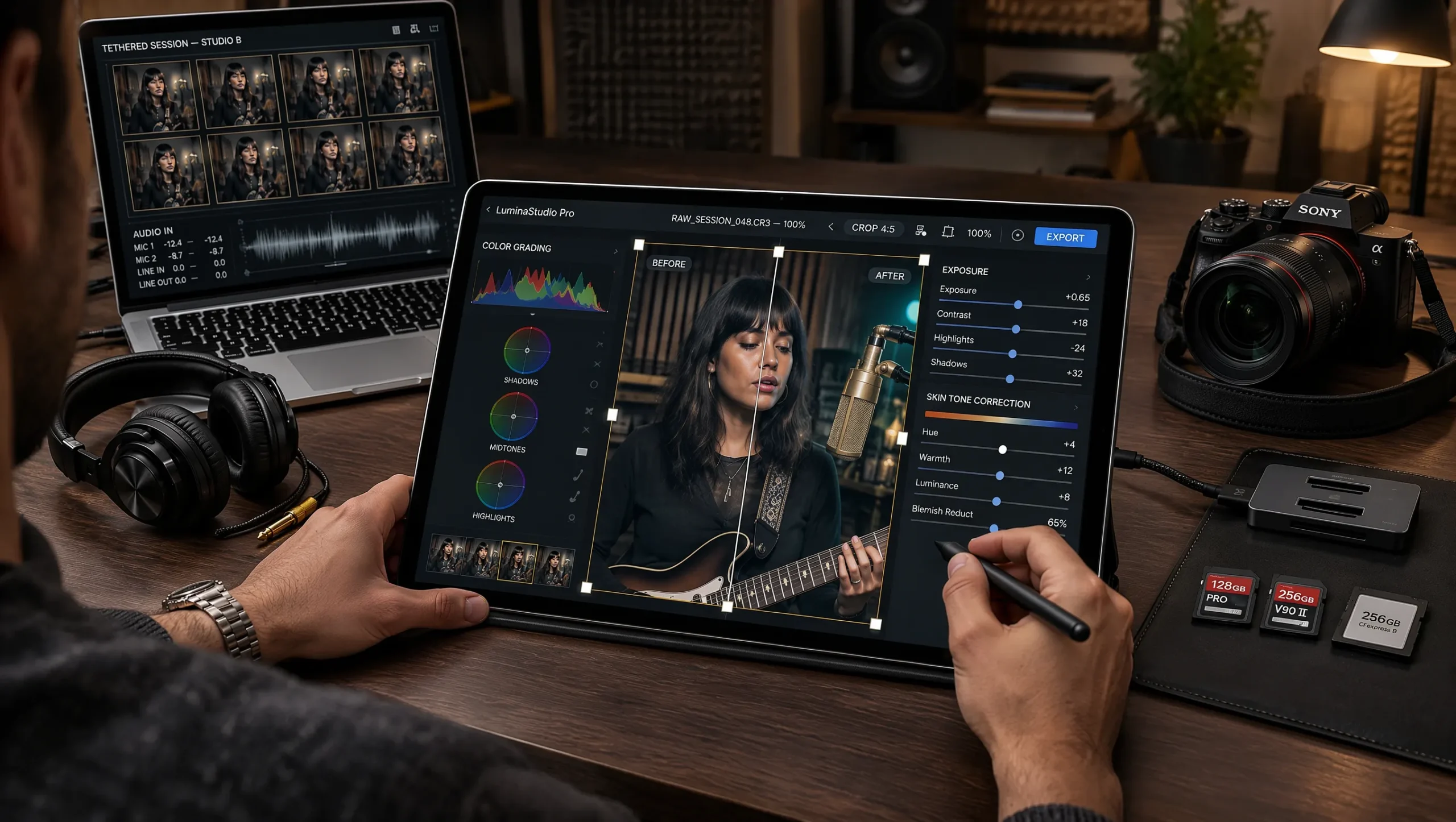
A strong musician portrait can communicate more than an artist’s appearance. It can reveal personality, creative energy, and musical identity through facial expressions, clothing, instruments, and carefully chosen backgrounds. Whether taken in a recording studio, rehearsal room, or backstage, a well-composed photograph helps musicians create a memorable visual impression.
Using Musician Portraits Apps allows artists to capture and edit professional-looking photographs directly from their mobile devices. With the right camera controls, lighting adjustments, and portrait editing features, musicians can create attractive images without relying on complicated photography equipment.
Digital Tools for Musician Portrait Photography
Smartphone photography has made creating promotional portraits more accessible. Musicians no longer need expensive cameras to produce useful images for their profiles and promotional materials. Modern applications provide practical features that make it easier to control lighting, focus, and image quality.
The right application can also simplify the editing process while maintaining a consistent artistic identity. Exploring Musician Portrait Photography Apps helps artists understand which digital tools support their photography needs and preferred visual styles.
Essential Camera Controls on Mobile Devices
Manual camera controls allow users to adjust exposure, ISO, shutter speed, and focus. These settings are particularly useful when photographing musicians in rehearsal spaces with changing lighting conditions. Adjusting focus carefully also helps keep facial expressions and instrument details sharp.
Portrait Editing Features for Musicians
Portrait editing tools can improve brightness, contrast, color balance, and overall image appearance. Some applications also provide skin adjustments and background effects. Musicians can use these features to create polished promotional photographs while keeping their personal style recognizable.
Lighting Adjustments Within Photography Apps
Good lighting helps reveal facial expressions and instrument details. Some photography applications include exposure compensation, shadow recovery, and highlight controls. These adjustments can make portraits look clearer when musicians are photographed near stage lights or under uneven indoor lighting.
Photographer Daniel Carson emphasizes the importance of understanding light, explaining, “I’m looking for soft light on my subject’s face.” This perspective reminds musicians that good lighting should begin during the photography session rather than depending entirely on editing afterward.
Choosing Apps for Better Musician Portraits
Not every photography application offers the same capabilities. Some focus on manual camera settings, while others specialize in portrait effects and post-production. Musicians should consider their photography experience, preferred visual style, and intended use before selecting an application.
The most useful option provides enough creative control without making the photography process unnecessarily complicated. A simple interface can be especially helpful when artists need to capture portraits quickly between rehearsals, recording sessions, or performances.
Comparing Manual Camera Settings
Applications with manual controls offer greater flexibility than basic automatic camera modes. Users can adjust ISO to manage image brightness, change shutter speed to control motion, and select focus manually. These options are helpful when photographing musicians holding instruments or performing expressive poses.
Exploring Background and Focus Controls
Background separation can make a musician stand out from a busy recording studio or rehearsal environment. Portrait modes and adjustable focus features help emphasize the subject while reducing distractions. However, musicians should check that instruments, hair, and clothing remain naturally defined.
Selecting Editing Tools for Natural Results
Editing tools should improve the photograph without changing the musician’s appearance too dramatically. Natural skin tones, balanced contrast, and realistic textures usually create more versatile promotional images. Photographer Benny Ang shares a simple philosophy, saying, “My belief is that ‘less is more’.” This approach encourages musicians to make thoughtful adjustments instead of applying excessive filters.
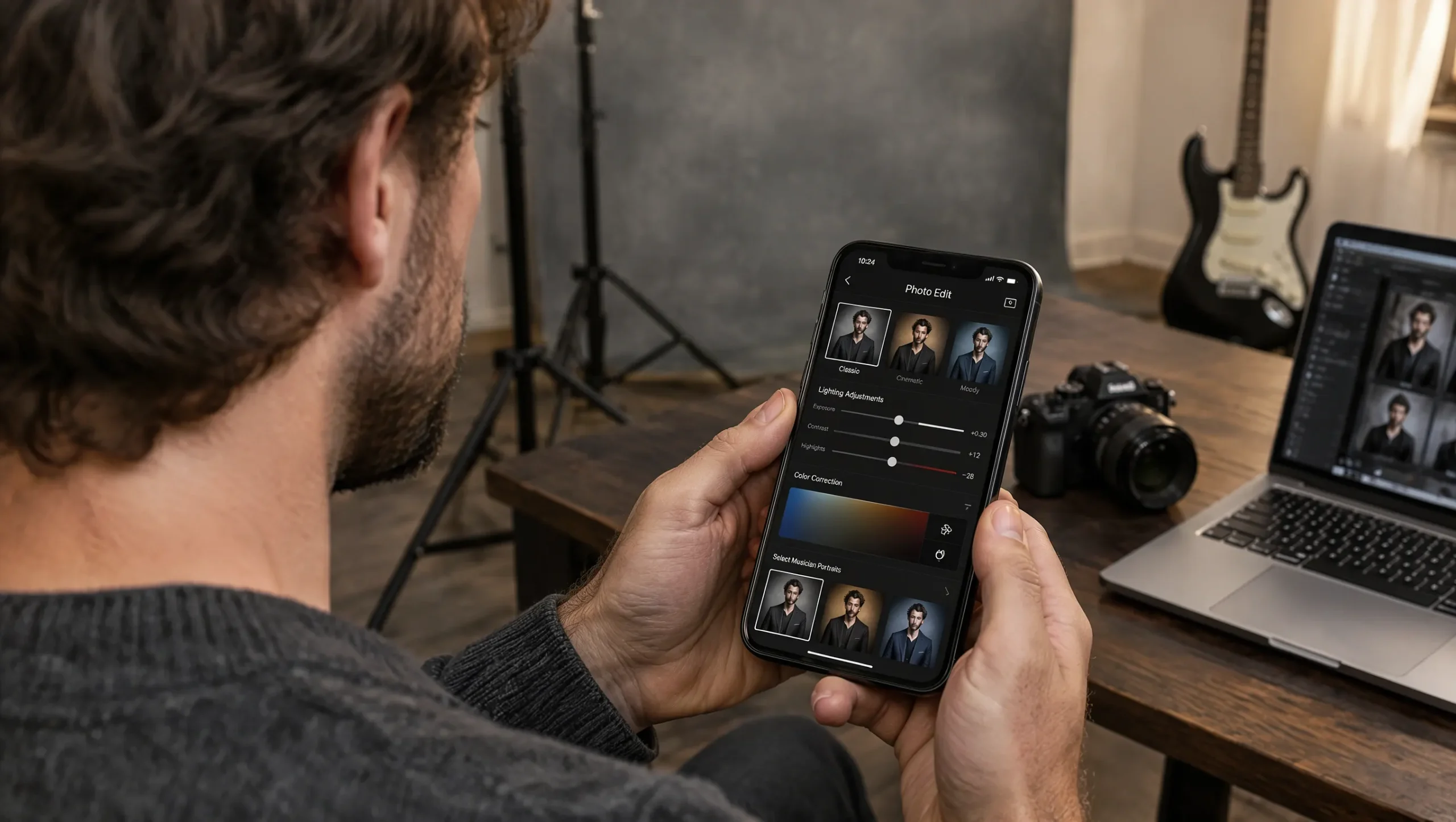
Improving Musician Portraits Through Mobile Editing
After capturing a portrait, thoughtful editing can make the image more suitable for different promotional purposes. Small adjustments often produce better results than applying several filters or dramatic effects. Musicians should focus on improving image quality while preserving the atmosphere of the original photograph.
Mobile editing also makes it easier to maintain a consistent visual identity across different platforms. By using similar lighting, colors, and editing preferences, artists can create a recognizable collection of photographs.
Enhancing Exposure and Image Sharpness
Exposure adjustments help balance bright and dark areas, especially in photographs taken under stage lighting. Increasing sharpness slightly can reveal details in facial expressions, clothing, and musical instruments. However, excessive sharpening may introduce unwanted noise and unnatural edges.
Maintaining Natural Skin and Instrument Colors
Accurate colors are important when creating professional musician portraits. Overly strong filters can change skin tones or make guitars, keyboards, and other instruments appear different from their actual colors. Adjusting white balance and saturation carefully helps preserve a realistic appearance.
Preparing Portraits for Digital Music Platforms
Musicians often need photographs for streaming profiles, artist biographies, websites, and social media accounts. Before uploading, check image dimensions, resolution, cropping, and file format. Keeping high-quality original files also makes it easier to prepare different versions without repeatedly reducing image quality.
Create Better Musician Portraits With the Right Apps
Creating memorable musician portraits is not simply about choosing attractive filters or using advanced camera settings. The most effective photographs combine suitable lighting, natural editing, and thoughtful composition to communicate an artist’s personality. When every detail works together, even a simple smartphone portrait can become a valuable part of an artist’s visual identity.
Explore mobile photography applications, experiment with different camera features, and start creating musician portraits that reflect your unique creative style.